
Cape Verde Stun Spain as African Teams Deliver Powerful World Cup Statement
Authored by lion-bet.net, 17 Jun 2026
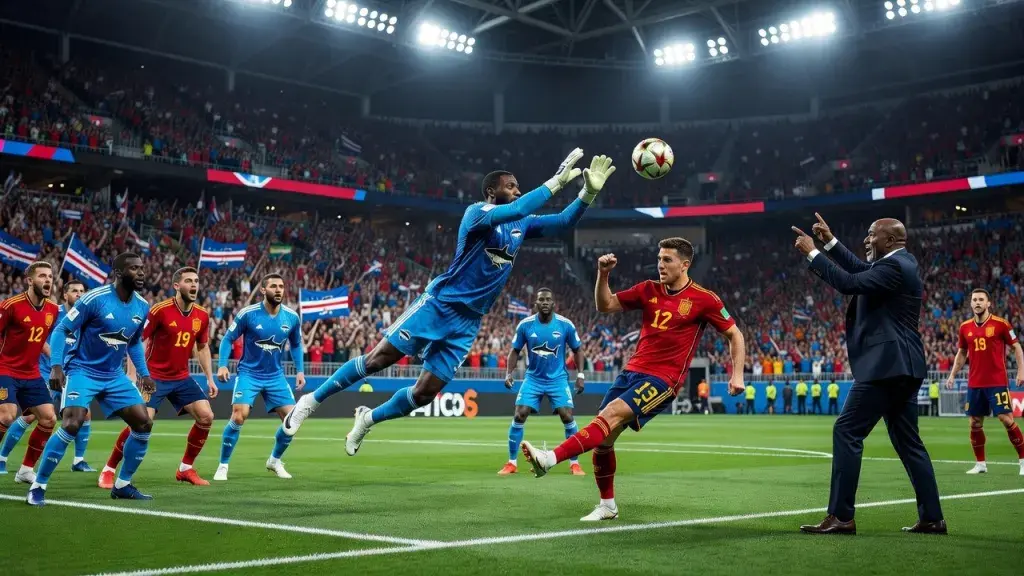
Few neutrals gave Cape Verde a realistic chance when they walked out at Atlanta Stadium to face Spain in what appeared, on paper at least, to be a thoroughly uneven World Cup group stage encounter. Yet football persistently refuses to respect paper formalities, and the Blue Sharks delivered a performance that resonated far beyond the boundaries of their small Atlantic island nation. In a competition already generating extraordinary drama, Cape Verde's display against one of the sport's most decorated footballing powers served as perhaps the day's most compelling argument for the beauty of the game.
The match was contested in an atmosphere thick with expectation, and much like those who follow greyhounds betting lines looking for an unlikely frontrunner to defy the odds and outpace the field, those watching Cape Verde sensed early on that this was not a team that had simply turned up to make up the numbers. Organisation, compactness, and a clear tactical identity were evident from the first whistle. Credit belongs firmly to head coach Pedro "Bubista" Brito, a former Cape Verde international defender who has, over years of patient and purposeful work, transformed the Blue Sharks into a disciplined, competitive unit that no longer concedes the mental battle before a ball has been kicked.
Central to Cape Verde's resistance was the performance of their veteran goalkeeper, whose agility and sharp reactions belied his age and drew immediate comparisons with the great African custodians who came before him - names like Emmanuel Okala, Best Ogedegbe, and Thomas Nkono, custodians who defended their nations' colours with ferocity and pride. The goalkeeper's display was not merely impressive in isolation; it was symbolic of an entire team that understood its collective role and executed it with conviction. Bubista has built something real in Praia, and the world took notice in Atlanta.
A Day That Affirmed Africa's Growing Presence at the World Cup
Cape Verde's performance did not arrive in isolation. Côte d'Ivoire secured a deserved victory over Ecuador, a result that, in truth, was expected of a side carrying the weight of West African football pedigree. Anything less would have been difficult to explain away for a nation the continent has long regarded as one of its leading football powers. Their win reinforced a straightforward but important point: African teams, when properly prepared and tactically organised, are capable of beating strong opposition from any confederation.
Morocco, having spent recent years steadily establishing themselves as a globally respected football nation, approached their fixture with the tactical maturity and defensive discipline that has become their hallmark. Their performance against one of football's traditional giants came as no surprise to those who have followed their development closely. They understood the assignment, contained the threats placed before them, and executed their game plan with calm authority.
Egypt's display against a powerful Belgian side was arguably the day's other standout narrative. The Pharaohs did not merely compete; they demonstrated the technical quality, tactical awareness, and mental resolve that signals a team capable of going deeper into this tournament than many expect. Captain Mohamed Salah's leadership and sustained excellence continue to shape Egyptian football's identity and inspire a broader generation across the continent. The Egyptian coaching staff deserves equal recognition - their proactive, structured approach has brought coherence and ambition to a squad that now carries realistic expectations, not just continental ones.
Tunisia's Position and the Broader Lesson for African Football Administration
Tunisia's inability to claim the result they needed is a setback, though not necessarily a final verdict. Football tournaments have regularly produced narratives of recovery and redemption, and the Carthage Eagles retain the opportunity to regroup, recalibrate, and ensure they are not among the first African representatives to exit. The margin for error, however, is now considerably reduced.
Taken collectively, this opening phase of the World Cup delivers a message that African football administrators would do well to study carefully. Cape Verde's story is not an accident. It is the product of structure, vision, and the correct utilisation of available resources - a lesson that remains frustratingly unlearned in several football associations across the continent, where squandered talent, poor governance, and short-term thinking continue to blunt what should be far greater potential. The Blue Sharks have demonstrated that population size and financial muscle are not prerequisites for competing with the best.
Nigeria's Absence From the Conversation Remains a Source of Concern
Against the backdrop of this encouraging continental picture, one uncomfortable truth stands out: Nigeria's Super Eagles have been nowhere near the standard set by the African sides making their presence felt at this tournament. While Cape Verde, Morocco, Egypt, and Côte d'Ivoire have competed with distinction and purpose, Nigeria's performance levels have not placed them in comparable territory. For a nation of Nigeria's footballing heritage, resources, and talent pool, that gap is not just disappointing - it is a pointed indictment of what has gone wrong in the administration and development of the game at home. The sadness felt across Nigerian football circles is real, widely shared, and, unless seriously addressed, unlikely to diminish any time soon.
This World Cup, still in its early days, is already rewriting some familiar narratives. African football is no longer arriving merely to participate. These teams are arriving with plans, with belief, and increasingly with the results to match. Cape Verde's performance at Atlanta Stadium may well be remembered as more than a single occasion - it may stand as another marker on the road toward African football's continuing and irreversible rise on the global stage.