
India's Afghanistan ODI Series Raises Serious Questions About Player Welfare
Authored by lion-bet.net, 18 Jun 2026
The ongoing ODI series between India and Afghanistan is proving difficult to justify on any meaningful cricketing level. Wins against a side of Afghanistan's current standing add little to India's international credibility, personal milestones carry reduced weight in such context, and the timing - in the middle of a brutal Indian summer - introduces a layer of risk that should alarm the Board of Control for Cricket in India. With a high-stakes white-ball series against England on the horizon, the question of what exactly this tour is for deserves a direct answer.
Injury Fears Mount in the Lucknow Heat
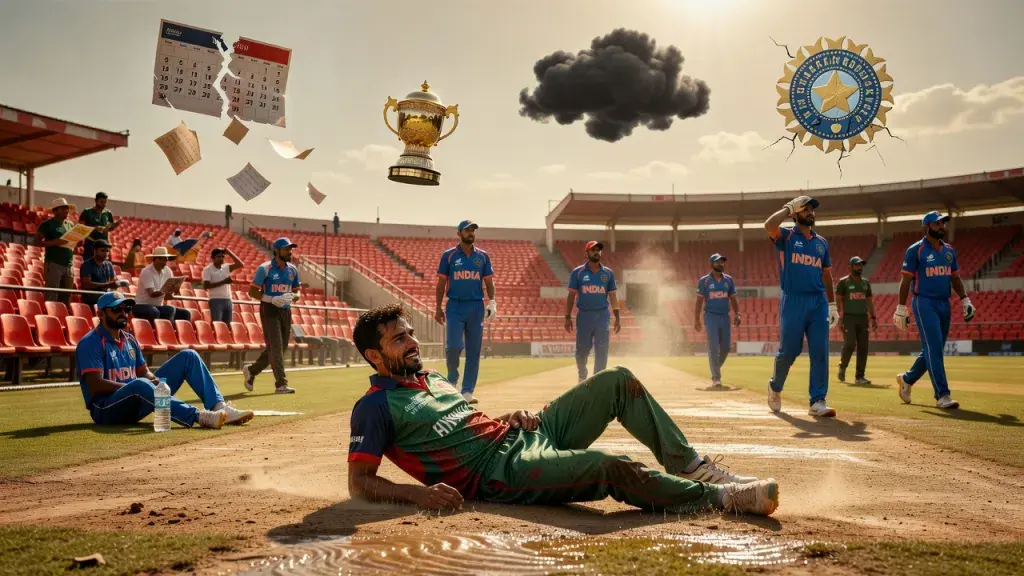
The second ODI at Lucknow's Ekana Cricket Stadium brought the welfare concerns into sharp focus. Afghanistan opener Darwish Rasooli hurt himself while fielding, gamely limped back out to bat later in the match, but was ultimately forced to retire from the field for a second time in the same game. It was Rasooli's first ODI appearance - a cruel introduction to international cricket at the highest level. His situation deserves genuine sympathy. In extreme heat, the human body loses fluids rapidly through sweat, and dehydration measurably increases the likelihood of muscular and soft-tissue injuries. The conditions in northern India at this time of year are not merely uncomfortable; they are physiologically punishing. Much like how cybersport live betting markets have grown precisely because fans seek engagement across formats and environments, cricket administrators must equally recognise that not every environment is appropriate for every form of competition - the demands on athletes are real and the risks are not hypothetical. One serious injury to a key Indian player here, particularly anything that rules someone out for weeks rather than months, could have immediate consequences for the England series.
A Schedule That Has Pushed Players to the Edge
To understand how India's players arrived at this point, it helps to trace the calendar. The national side contested the T20 World Cup and won it - an achievement that demands enormous physical and mental output regardless of the conditions or the opposition faced along the way. Almost immediately afterwards, the Indian Premier League ran for two full months in some of the most demanding heat the subcontinent produces. Less than a week after the IPL concluded, the one-off Test against Afghanistan got underway. Then India A launched a 50-overs Tri-series campaign in Sri Lanka. Then the ODI series began. The overwhelming majority of Indian players currently on the field played in the IPL. The idea that any of them are fully recovered and operating at peak physical capacity is, at best, wishful thinking.
The BCCI's Scheduling Problem Is Bigger Than One Series
There are two distinct and serious risks embedded in the current situation. The first is straightforward: elite players operating in extreme heat, without adequate recovery time, are significantly more vulnerable to injury. Losing a front-line batter or a key pacer to a muscle tear sustained in a low-stakes August ODI, weeks before England arrive, would represent a failure of planning rather than an act of bad luck. The second risk is subtler but equally damaging in the long run. Saturation erodes appetite. Fans who follow cricket obsessively can absorb a great deal, but even the most devoted supporters have a threshold. Scheduling cricket to compete with marquee global events - such as the FIFA World Cup - fragments attention and dilutes the value of each individual series. The BCCI is one of the most powerful and resource-rich sporting bodies in the world. That power comes with an obligation to manage the game's ecosystem responsibly, and a calendar that leaves players exhausted and fans fatigued is not responsible management. A genuine reassessment of how bilateral home series are scheduled - particularly those involving significant mismatches in opposition quality - is long overdue.